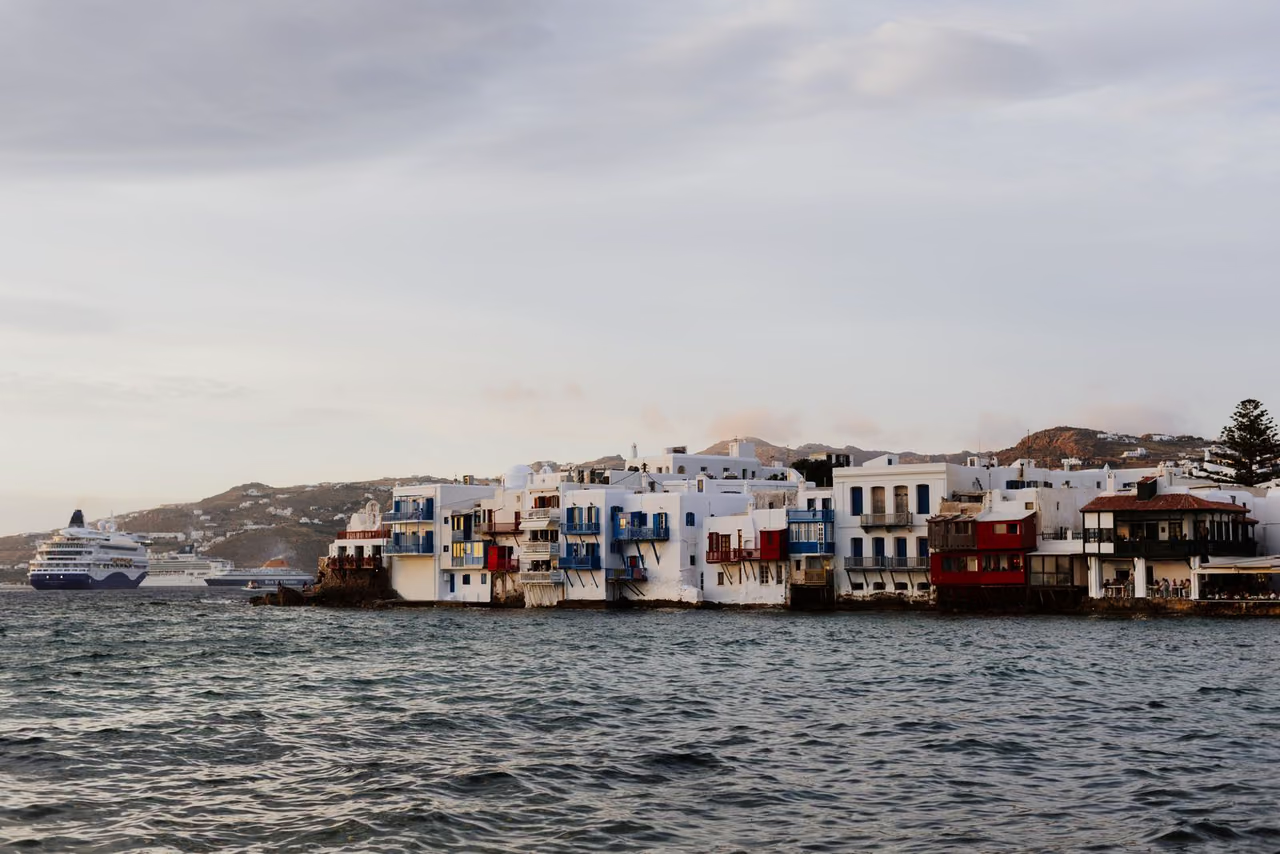
Mykonos Cruise Port & Tender Guide
Confirm your ship’s berthing or tender arrangements before travelling. Check the final tender or all-aboard time before taking an independent boat excursion.
| Harbour context | Where | Access notes |
|---|---|---|
| New Port area | Main modern cruise context for many larger ship calls | Mykonos Town is not always a simple walk from every landing — confirm whether a ship shuttle, taxi or organised pickup applies on your call |
| Old Port / harbour town context | Historic harbour atmosphere beside Chora’s pedestrian lanes | Once in town, windmills, Little Venice and Paraportiani are largely pedestrian — footwear and heat planning matter more than road distance |
New Port and Old Port
Mykonos has more than one harbour story. The New Port area is the practical context for many modern cruise operations, while the Old Port sits closer to the postcard waterfront of Chora. Treat them as related but not interchangeable places on a map.
Your ship’s daily programme is the authority for where you land, whether a shuttle runs, and how long transfer to town may take. Do not invent a fixed walking time or shuttle price from a website.
Dock versus tender
Some Mykonos calls involve tendering; others may berth or use different harbour arrangements depending on the ship, weather and operational decisions.
Confirm your ship’s berthing or tender arrangements before travelling. Do not assume yesterday’s call, or another line’s pattern, will match yours.
Tender uncertainty
When tenders run, waiting time, queue length and intervals between boats can vary with sea state, passenger volume and ship operations. Build buffer into any plan that depends on a fixed meeting time.
Confirm tender instructions, boarding process and the final tender time for returning passengers before you leave the immediate landing area for independent exploring.
Getting into Mykonos Town
Mykonos Town (Chora) is the luminous pedestrian heart of the island: windmills, Little Venice, Paraportiani and a maze of whitewashed lanes. Reaching it from a New Port landing may involve a ship shuttle, taxi or organised excursion pickup — confirm what applies on your day.
Once in town, expect uneven paving, steps, limited shade and summer crowds. Comfortable footwear matters more than fashion for a cruise clock.
Cruise-line shuttles and local transport
Some ships organise shuttle assistance between landing and town. Availability, frequency and any cost are ship-specific — confirm on board rather than assuming a universal service.
Taxis and local options exist, but wait times and fares vary with demand. Agree the destination clearly and keep your return plan conservative. Sea-bus or local water links, where relevant, should be verified locally on the day rather than treated as a fixed timetable from this guide.
Meeting points for shore excursions
Organised tours usually describe meeting points relative to the cruise pier, tender pier or a harbour landmark. Exact signage and staff positions can differ by operator and by how busy the day is.
If your voucher names a meeting point, allow extra time after disembarkation or tendering to find it. A map pin alone is not a timed arrival plan.
Private collection
Private land tours often arrange collection from the cruise pier or tender pier as stated on the voucher. Follow pickup instructions and allow delay if tenders are running slowly.
Private format helps with pacing, but it does not remove the need to return for the last tender or all-aboard. Share your ship timing with the operator when booking.
Boat check-in and Delos sailings
Shared boat excursions — including Delos and beach sailings — typically require check-in before departure. That check-in sits after you have already left the ship and reached the meeting point.
Check the final tender or all-aboard time before taking an independent boat excursion. Fixed sailings are only cruise-compatible when published return times leave a comfortable margin.
Returning to the ship
If you tendered ashore, your return depends on the ship’s tender service as much as on road or walking time. Aim to be at the tender landing with a comfortable margin — not at the last possible moment.
From town or a beach stop, allow for traffic, heat fatigue and queues. Missing the last tender is a ship-operations problem, not something an excursion operator can solve after the fact.
All-aboard versus last tender
All-aboard is earlier than the published sailing time. On tender calls, the last tender may be earlier still relative to when you need to be back on board.
Plan every independent or organised day backwards from the earlier of all-aboard and last tender.
Heat, wind and shade
Summer days on Mykonos can be hot, bright and windswept. Town lanes offer limited continuous shade; Delos is more exposed still.
Carry water, sun protection and a hat. Prefer earlier timing for outdoor photography stops when your itinerary allows.
Pedestrian lanes and uneven surfaces
Chora is largely pedestrian, with narrow lanes, steps and irregular paving. Closed or grippy footwear is more practical than smooth soles.
Expect similar uneven footing at archaeological sites and some harbour edges. Pace yourself rather than treating every stop as a quick photograph.
Limited mobility
Tender boats, harbour edges, town gradients and archaeological terrain are not step-free environments. Several published excursions state they are not wheelchair accessible.
Discuss specific needs with the supplier before booking. Private touring can ease pacing but cannot remove stairs, tender boarding or uneven stone.
Crowds, traffic and busy calls
Peak season and multi-ship days increase queues for tenders, taxis and the most photographed corners of town. Build slack into meeting times and returns.
Earlier timing for Little Venice and the windmills, when your ship schedule allows, often feels calmer than the middle of the day.
Beach-return considerations
Beach transfers and sailings can place you farther from the ship for longer. Confirm return logistics and whether the product returns to the pier or leaves you in town.
Do not assume sunbeds, towels or beach-club access are included simply because facilities exist at the beach.
Independent exploration
Independent time in Mykonos Town — windmills, Little Venice, a quiet lane lunch — can work well when you keep the return simple and confirm last-tender timing.
Delos and many southern beach sailings are not casual DIY add-ons within a typical cruise day. Choose organised boat logistics when that scenery is the priority and timings clearly fit.
Currency and language
Greece uses the euro. Cards are widely accepted in visitor areas, but carrying a little cash remains useful for small purchases and some site entrances.
Greek is the local language; English is commonly understood in harbour and visitor settings. Keep booking vouchers and ship timing notes easy to show if you need help finding a meeting point.
Keep planning
Mykonos cruise port FAQs
Is Mykonos a tender port?▼
Some cruise calls involve tendering; others may differ. Confirm the ship’s tender or berth instructions and final return timing before travelling independently or joining a fixed-schedule excursion.
What is the difference between New Port and Old Port?▼
The New Port area is the practical context for many larger cruise operations. The Old Port sits closer to Chora’s historic waterfront. Your landing pattern and any shuttle are ship-specific — confirm on board.
What is the difference between all-aboard and the last tender?▼
All-aboard is earlier than published departure. On tender calls, the last tender may require you to be at the landing even earlier. Plan backwards from the earlier constraint.
Can I walk into Mykonos Town from the cruise landing?▼
It depends on where you come ashore. Do not assume a short walk from every New Port arrangement. Confirm shuttles, taxis or organised pickup for your call.
Is Delos easy to join after tendering?▼
Only if tender time, transfer to the boat meeting point, and the operator’s check-in still leave a clear margin before departure and a comfortable return to the ship. Confirm timings for your date before booking.
What should limited-mobility passengers know?▼
Tenders, harbour edges, town lanes and archaeological sites often involve steps and uneven ground. Several excursions are not wheelchair accessible — discuss needs with the supplier before booking.